#collaboration
5 notes tagged “collaboration”. All notes →
-
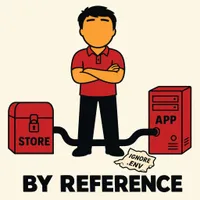
'Ignore .env' is not a defense
agents
A worker once obeyed every rule about secrets and still pasted a live token into a notes file, twice, and committed it. The rule it had was a sentence in a prompt. What I run now is a stack of controls that hold even when the model doesn't — identity, scope, transport, proof, and a hook — none of them foolproof, all of them more than a wish.
-
Don't be the meat proxy
agents
A meat proxy is a human acting as the cable between two systems, copy-pasting output from one into the other. Why it's the worst link in an agent workflow, and what to build instead.
-
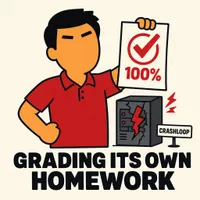
Don't let the agent grade its own homework
agents
An agent reporting 'done' is the actor grading its own work. The cheapest guard against silent failure is an independent observer — a second agent, a separate tool, or the live artifact itself. Interactively you spawn the watcher by hand; in a fleet it's a validation gate. Same principle, two scales.
-
Anchor on a fact the model can't see
agents
An agent's confidence is uncorrelated with whether it's right. The cheapest correction you can make is to hold out one ground-truth fact it never had in context — usually a number — and check its output against that. Works the same whether you're watching one session or auditing a fleet's reports.
-
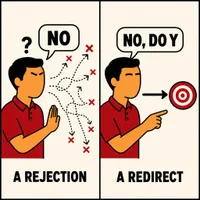
'No' is not an instruction
agents
The cheapest way to steer an agent is also the most-skipped one. A rejection tells the agent what not to do; the space of 'not that' is enormous. Name the alternative in the same breath and you re-steer in one turn instead of N. True for one pet session and for twenty cattle workers.