The Notebook
Notes
Opinions, post-mortems, and longer-form work on headless LLM systems, agent orchestration, and platform engineering — grounded in shipped systems. The process they come out of is written up once, end to end, in the workflow manual.
Start with these three
-
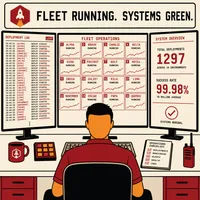
What breaks when you run twenty agents at once
agents
A failure taxonomy from a year of running coding-agent fleets unattended. Eight ways a fleet dies, none of which involve the model — and the operational discipline they add up to.
-
Pet agents vs. cattle agents
agents
The infrastructure metaphor that decided how I build with LLMs. Why most people are running pets, why pets do not scale, and what cattle actually require.
-
The unit economics of running cattle
agents
How to make the math work when twenty headless workers are spending money without you. Why the pet model has no built-in cost discipline, what the cattle model requires, and what to measure when tokens are the wrong unit.
All notes
-
Your CLI has a second user now
agents
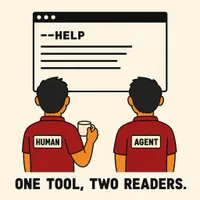
Every command-line tool you ship is now driven by language-model agents as well as people. An agent learns the tool from --help, parses stdout as data, treats the error message as its only hint, and cannot answer a prompt. Here is what that changes about help text, errors, output, flags, and login — and why the agent-friendly version is the better tool for people too.
-
My agents adapt to where they work in the codebase. Here’s how.
agents
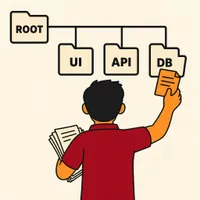
The same agent needs different instructions for a checkout form and a database migration. Here’s how I use AGENTS.md files to make that context follow the code.
-
A mute gate is worse than a red one
agents
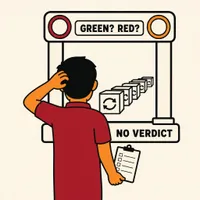
Every verification gate is designed for two states: green and red. The dangerous one is the third — a gate that produces no verdict at all. My CI started twenty-five builds in a day and finished none, and a flaky gate froze 36 tasks behind work that was already done. Red is information. Silence is the failure you don't get told about.
-
'Ignore .env' is not a defense
agents
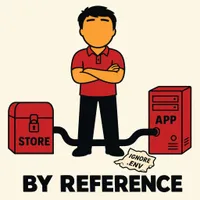
A worker once obeyed every rule about secrets and still pasted a live token into a notes file, twice, and committed it. The rule it had was a sentence in a prompt. What I run now is a stack of controls that hold even when the model doesn't — identity, scope, transport, proof, and a hook — none of them foolproof, all of them more than a wish.
-
Don't be the meat proxy
agents
A meat proxy is a human acting as the cable between two systems, copy-pasting output from one into the other. Why it's the worst link in an agent workflow, and what to build instead.
-
Trust is a property of the system, not the agent
agents
A near-miss with a git flag once put three volumes of real data one sync cycle from deletion — caught by luck, not by design. The right fix wasn't more vigilance. It was building the trust into the system itself: an agent doesn't need to be trusted, an action needs to be cheap to undo.
-
What breaks when you run twenty agents at once
agents
A failure taxonomy from a year of running coding-agent fleets unattended. Eight ways a fleet dies, none of which involve the model — and the operational discipline they add up to.
-
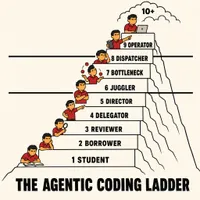
The agentic coding ladder is a list of things you give up
agents
Steve Yegge's eight levels read the climb by how much you trust the AI. Here's a complementary lens on the same ascent: measure it by what you give up at each rung — which is why some people skip rungs entirely, having no old coding habits to undo. It starts with the search bar and ends with something none of us can name yet.
-
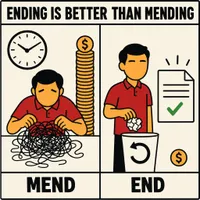
Ending is better than mending
agents
Huxley wrote it as dystopian propaganda for mindless disposability. In the agent era the economics it described have quietly become correct — for code. When the agent produces the wrong artifact, mending spends your scarce attention; ending spends cheap tokens. Revert the commits. Sometimes nuke the repo.
-
Don't let the agent grade its own homework
agents
An agent reporting 'done' is the actor grading its own work. The cheapest guard against silent failure is an independent observer — a second agent, a separate tool, or the live artifact itself. Interactively you spawn the watcher by hand; in a fleet it's a validation gate. Same principle, two scales.
-
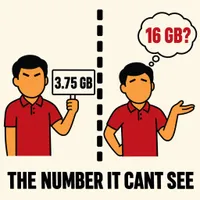
Anchor on a fact the model can't see
agents
An agent's confidence is uncorrelated with whether it's right. The cheapest correction you can make is to hold out one ground-truth fact it never had in context — usually a number — and check its output against that. Works the same whether you're watching one session or auditing a fleet's reports.
-
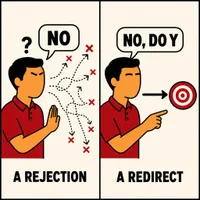
'No' is not an instruction
agents
The cheapest way to steer an agent is also the most-skipped one. A rejection tells the agent what not to do; the space of 'not that' is enormous. Name the alternative in the same breath and you re-steer in one turn instead of N. True for one pet session and for twenty cattle workers.
-
Benchmarks measure a model you are not running
agents
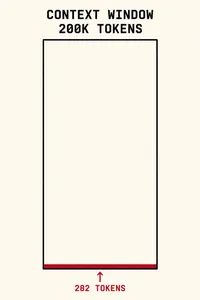
Terminal-Bench 4.0 tasks have a median of 394 tokens. SWE-bench Pro: 707. HumanEval: 117. Every major coding benchmark evaluates a model operating with essentially an empty context window — which is almost never the condition you run in. Unless you are running cattle.
-
The plan is the prompt
agents
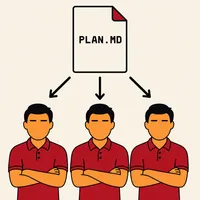
Why a detailed plan document is the most token-dense artifact you will write for a headless agent fleet. What a plan actually needs to contain, how it decomposes into a verified graph of single-task beads, and why a bad plan is more expensive than it looks when twenty workers are running it simultaneously.
-
The unit economics of running cattle
agents
How to make the math work when twenty headless workers are spending money without you. Why the pet model has no built-in cost discipline, what the cattle model requires, and what to measure when tokens are the wrong unit.
-
Deterministic state machines for non-deterministic agents
agents
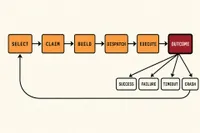
Why agent orchestration needs explicit outcome handlers. The control structure that lets twenty headless workers run unattended without the operator becoming the loop.
-
Pet agents vs. cattle agents
agents
The infrastructure metaphor that decided how I build with LLMs. Why most people are running pets, why pets do not scale, and what cattle actually require.
-
A new place for opinions and biases
meta
Why I started these notes, what I plan to put on this surface, and what to expect.